Biohazard Cleanup
Contaminated materials removed, surfaces disinfected, odor treated and waste hauled away from your property.
Learn more →Kansas · Geary County
Unsure whether a mess counts as a biohazard in Junction City, KS? Call (877) 812-4220 and ask. Blood, human waste, decomposition, sharps and sewage all get full protective gear and hospital-grade disinfection.
If anyone is in danger, call 911 first. For a suicide crisis, call or text 988.
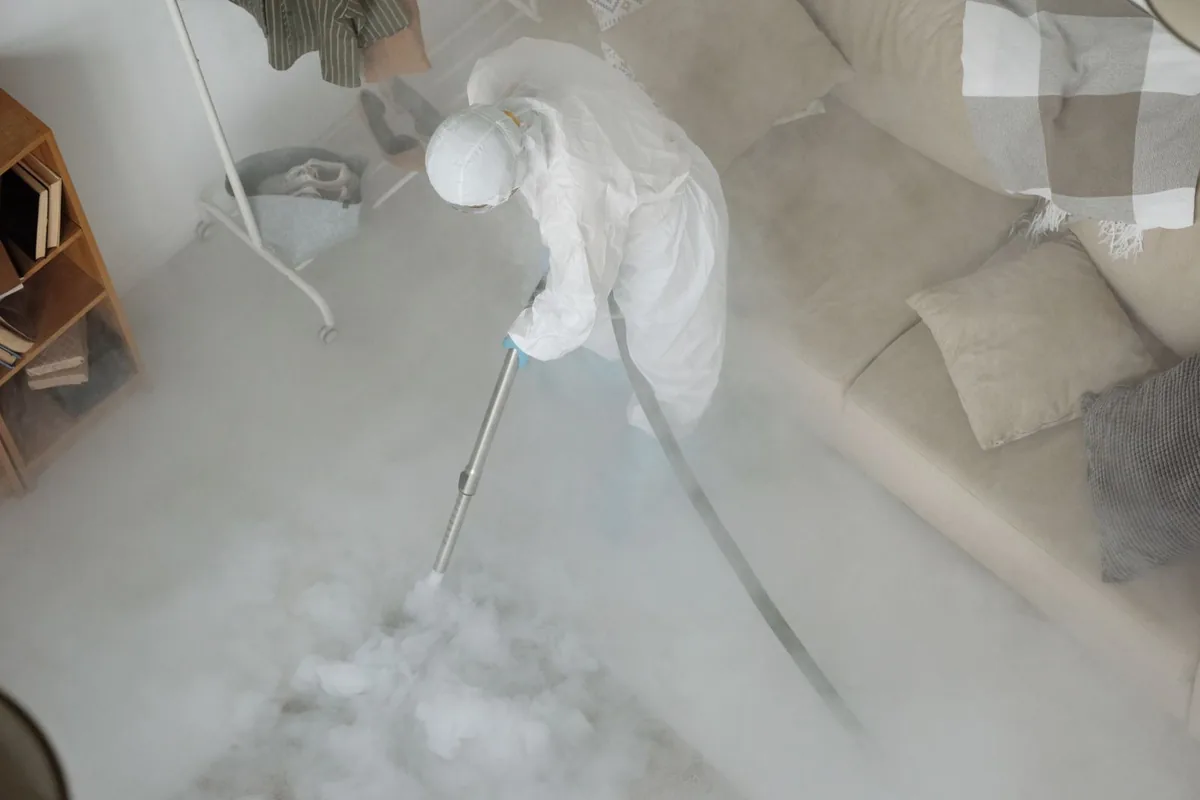
When a death, an assault or a sudden illness leaves blood or bodily fluids behind, ordinary cleaning is not enough. Biohazard cleaning services in Junction City remove the contamination itself, not just the stain, and you can call Junction City Biohazard Cleanup Help to get started.
Work begins once law enforcement or the investigator releases the scene. After that, crews move through containment, removal, disinfection and odor treatment in Junction City, Grandview Plaza and the wider Geary County area.
Older adults make up about 10% of residents in Junction City, below the Kansas average, so calls come from a broad mix of situations, including accidents, crime scenes and rental turnovers. The median home in Junction City dates to 1981. Newer homes usually have drywall, laminate and engineered flooring, but fluids still reach the padding and subfloor.
Protective equipment is the first thing a crew puts on and the last thing it takes off. Respirators, gloves, face protection and disposable suits keep technicians safe, and OSHA's Bloodborne Pathogens Standard (29 CFR 1910.1030) is the guide for how it is used.
Sealing, cleaning, disinfecting and ventilating work together. Plastic barriers and HEPA air scrubbers hold contaminants in place, EPA-registered disinfectants do the germ kill, and hydroxyl or ozone treatment clears the odor that is left.
Each of these biohazard cleaning services is open around the clock in Junction City, KS. Tap a card to read more, or call (877) 812-4220 to talk it through with a cleanup specialist.
Contaminated materials removed, surfaces disinfected, odor treated and waste hauled away from your property.
Learn more →Blood, bodily fluids and residue removed and disinfected after law enforcement releases the scene.
Learn more →Discreet trauma cleaning that covers waste disposal, odor removal and records for insurers.
Learn more →Decomposition cleanup that treats the room, the air and the odor at its source.
Learn more →Professional suicide cleaning services that spare relatives and landlords from the hardest part.
Learn more →Homicide cleaners remove contaminated materials, disinfect every affected surface and prepare records for insurers.
Learn more →Blood in cars, vans and rideshare vehicles cleaned from seats, mats and panels, then disinfected.
Learn more →Human feces cleanup and removal in homes, rentals and workplaces, with odor treatment included.
Learn more →Commercial feces cleanup and urine odor control for restrooms, shops, schools and care sites.
Learn more →Decomposition odor removal that treats flooring, walls and air after an unattended death.
Learn more →Room-by-room help for families, landlords and residents dealing with a hoarded home.
Learn more →Full-house hoarder cleanout with sorting, haul-away and deep cleaning from the first room to the last.
Learn more →Animal hoarding cleanup with protective gear, soaked flooring removal and thorough sanitizing.
Learn more →Respectful squalor cleaning for owners, landlords and families, step by step.
Learn more →Raw sewage removal, tear-out of soaked materials and full disinfection after a backup or overflow.
Learn more →COVID-19 cleanup and coronavirus disinfection of high-touch surfaces, bedrooms, bathrooms and shared rooms.
Learn more →Cleaning first, disinfecting second: a careful process that targets the germs, not only the stain.
Learn more →Safe collection of used needles, syringes and contaminated supplies, with proper containers and transport.
Learn more →Needle and sharps cleanup: syringes found, collected with tools and disposed of in sealed containers.
Learn more →Cleanup after police release: items, residue and soiled materials handled without judgment.
Learn more →Meth lab cleanup: residue testing, removal of contaminated materials and decontamination of the property.
Learn more →Fentanyl residue removal with protective gear, soft material removal and proper disposal.
Learn more →Spills, leaks and abandoned chemicals contained, removed and hauled away by crews in protective gear.
Learn more →Cleanup that begins once responders clear the scene, with records for insurers, owners and inspectors.
Learn more →Tear gas cleanup for homes, shops and vehicles, with testing, containment and a final check.
Learn more →Safe wet-clean removal of mouse and rat droppings, nests and soiled insulation from attics and crawl spaces.
Learn more →Removal of insulation soaked with guano, plus odor treatment and sanitizing of the structure.
Learn more →Dead animal odor removal that targets the source of the smell, not just the air.
Learn more →Biohazard car detailing after an accident, a crime or a medical emergency in or near the cabin.
Learn more →Blood and body fluids removed and disinfected after falls, cuts, crashes and workplace injuries.
Learn more →Workplace biohazard cleanup that contains the area, removes contamination and documents the work for insurers.
Learn more →House cleanout and hauling for estates, landlords and out-of-town families after a loss.
Learn more →A technician looks for every source of contamination, including areas the eye misses, such as under flooring and inside vents. The type of biohazard sets the method.
Barriers and filtered air keep the problem inside the affected room. Technicians put on respirators, gloves and disposable suits.
Crews in protective gear remove contaminated materials, clean every surface and disinfect with EPA-registered products. Waste is sealed and carried out as regulated medical waste.
HEPA scrubbers and odor treatment clean the air. A final walkthrough, and ATP testing where it is useful, shows whether anything was missed.
Cleanup technicians know families may be grieving. They keep conversations short, kind and free of judgment, and they treat belongings with care.
At crime and death scenes, work waits for law enforcement or the investigator to release the property. Nothing is disturbed before that.
One biohazard cleanup company covers removal, disinfection, odor removal and damaged materials, so the family can step back.
Local help in Junction City, Junction City and nearby towns means crews know the area, local police and the way homes in the region are built.
Biohazard cleanup in Junction City, KS typically costs $500 to $25,000, depending on the type of biohazard, the size of the affected area and how far fluids soaked into porous materials.
Most residential jobs cost $3,000 to $5,000 (Fixr). The main price drivers are the area affected, the number of porous materials removed, the amount of odor treatment needed and the cost of regulated waste disposal. A small spill sits at one end and a hoarder house or unattended death at the other.
| Type of job | Typical range |
|---|---|
| Blood spill cleanup, small area | $500 - $2,500 |
| Crime scene cleanup, most homes | $1,500 - $7,500 |
| Unattended death cleanup | $2,000 - $7,000 |
| Suicide cleanup | $1,500 - $5,500 |
| Sewage cleanup, most homes | $2,000 - $10,000 |
| Hoarding cleanup, level 3 home | $2,000 - $5,000 |
| Meth lab cleanup, typical | $15,000 - $20,000 |
Estimates only, not a quote. Sources: Fixr, Yelp Costs, BioCleaners Directory, PushLeads, Dropcurb, Bob Vila and cleanup company cost guides. Call (877) 812-4220 to talk through the job.
Failing septic systems and sewer backups push raw sewage, a Category 3 biohazard, into homes. Sewage cleanup removes contaminated materials and disinfects every surface.
An average July high of 89 degrees in Junction City speeds up decomposition after a death. The sooner the scene is released and cleaned, the less the odor and fluids spread.
With a vacancy rate of 12% in Junction City, empty buildings can collect animal waste, drug paraphernalia and storm damage that nobody sees until later.
Geary County has a Relatively Low river flood risk rating from FEMA. Floodwater mixes with sewage, and anything it touches needs full biohazard cleaning, not just drying.
Attics, barns and sheds can hold droppings, guano and carcasses that carry disease. Careful removal and disinfection protect the people who go back in.
Hoarder homes can hide rotting food, animal waste, mold and pests, along with fire and structural hazards. Hoarding cleanup sorts belongings and restores a livable condition.
Not every biohazard looks the same or carries the same risk. A cleanup team sorts the problem by type and by size, and that sorting decides the protective gear, the method and the budget.
Respirators, gloves, face protection, boot covers and disposable suits make up the usual personal protective equipment (PPE). It is put on before entering the work area and disposed of as contaminated waste afterwards.
Regular cleaning removes dirt. Biohazard cleanup removes infectious material and reaches under and behind surfaces, using PPE, containment, EPA-registered disinfectants and regulated waste disposal. It follows safety rules that ordinary cleaning does not.
Symptoms such as stomach pain, vomiting and diarrhea can begin within a few hours to a few days after contact with raw sewage, depending on the germ. Sewage is a Category 3 biohazard, so it should be cleaned by a crew wearing protective gear, and anyone with symptoms should see a doctor.
Yes. Dried blood can still carry bloodborne pathogens. The CDC notes hepatitis B can survive on surfaces for at least seven days, and scraping dried blood releases particles. It should be handled with PPE and disinfected.
Ask whether the crew follows OSHA bloodborne pathogen rules, uses EPA-registered disinfectants, disposes of waste lawfully and can document the work for insurance. Compare how biohazard cleanup companies explain scope, cost range and privacy, and be cautious about anyone who pressures you to sign on the spot.
OSHA's Bloodborne Pathogens Standard, 29 CFR 1910.1030, sets rules for protective equipment, handling, training and disposal when workers face blood or other potentially infectious materials. Biohazard cleanup crews follow it on every job.
The nearest emergency room is Stormont Vail Health Flint Hills, Llc in Junction City, about 5 miles from Junction City. In any emergency, call 911 first. Cleanup waits until people are safe.
Tell the landlord and the renters insurer right away. With renters in about 50% of homes in Junction City, many rentals have a process for this. The building is usually the owner's job, and belongings may fall under the tenant's policy.
The service area reaches from Junction City to Junction City, Grandview Plaza and Fort Riley. Whichever town the property is in, the process and the protective standards stay the same.
No judgment and no pressure, just a clear plan for the property.
Call (877) 812-4220